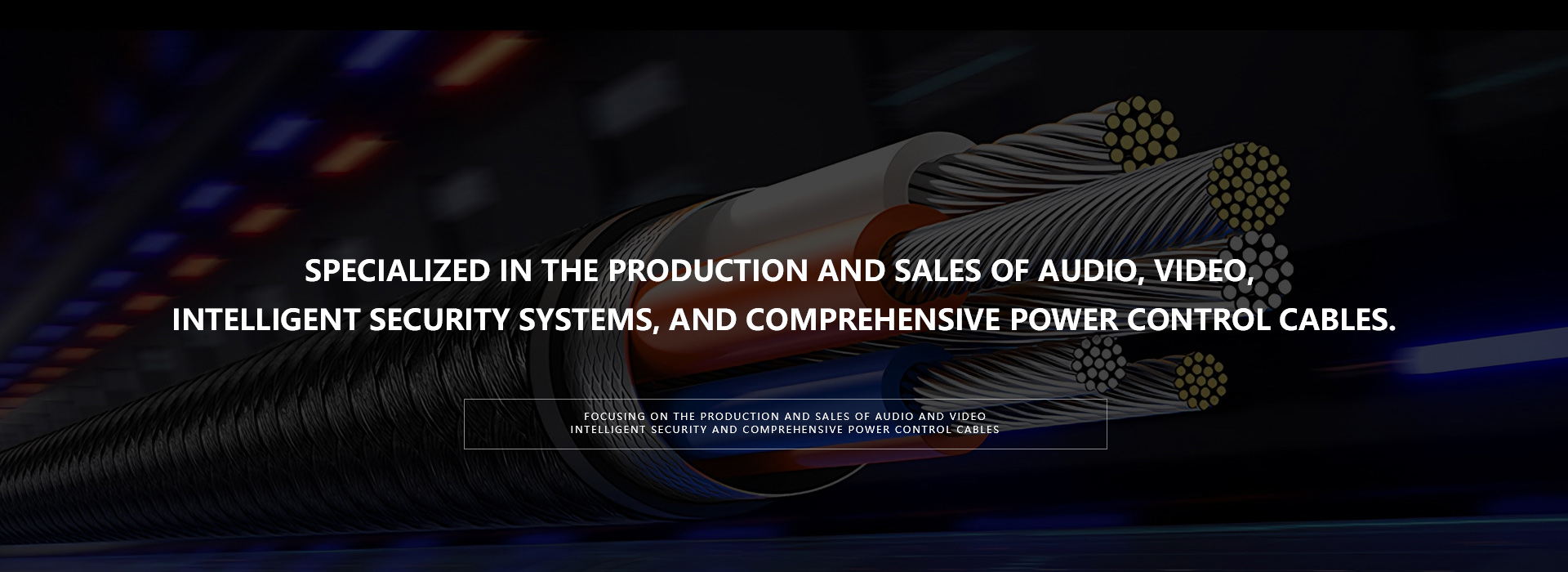
Outdoor water-proof cables are mainly used for signal or power transmission in complex outdoor environments.The key point is to address the impact of water intrusion on the performance of the cables.Such cables are commonly used in underground laying,pipeline laying,and outdoor equipment connection scenarios.
From the perspective of structural design,outdoor water-blocking cables usually incorporate water-blocking materials inside,such as water-blocking tapes,water-blocking yarns,or water-blocking pastes.When the outer sheath is damaged,it can delay the spread of water along the cable's length,reducing the risk of moisture affecting the internal conductors and insulation layers.
The outer sheath material is mostly made of polyethylene-based materials with good weather resistance,possessing certain anti-ultraviolet and temperature difference resistance properties.Under long-term exposure to outdoor conditions,the stability of the sheath directly affects the service life of the cable.
In practical applications,outdoor water-blocking cables need to be selected based on the laying environment.Underground laying has higher requirements for pressure resistance,while overhead laying focuses more on tensile strength.During the construction process,the sheath should be protected from damage to ensure the integrity of the water-blocking structure.
Through reasonable design and standardized construction,the outdoor water-blocking cables can maintain a relatively stable operating state in complex environments.


 CN
CN